REVIEW · SICILY
Sea Villa Cefalù: Hands-on 4-Course Pasta Cooking Class & Wine
Book on Viator →Operated by Sicilian Food Lovers - One Day Cooking Class · Bookable on Viator
Sicily tastes better when you cook it. This hands-on class at Villa Palamara turns a sea-view afternoon into real kitchen confidence with Chef Antonio guiding you through classic dishes from start to finish.
I especially love the combination of the historic seaside setting and the way the teaching sticks. You learn two big Sicily favorites, Pasta alla Norma and Sicilian braciole, and you build the rest of the meal around them so you leave with a full, workable menu in your head.
One thing to keep in mind: it runs about 5 hours, starting at 11:30 am, so it’s not a quick stop. Also, it’s not refundable if plans change.
In This Review
- Key reasons this class earns a 5-star mood
- Villa Palamara in Cefalù: why this setting matters
- The 11:30 schedule: what a 5-hour pasta day actually feels like
- Pasta alla Norma from scratch: the Sicilian “main character”
- Sicilian braciole and pork rolls: technique you can actually repeat
- Stuffed zucchini, orange and fennel salad, and Bianco Mangiare
- Starter: Stuffed zucchini
- Side dish: orange and fennel salad
- Dessert: Bianco Mangiare with lemon cream and fruit
- Wine, coffee, and what’s truly included
- Dietary needs: how you keep the meal fair and still Sicilian
- Small group size in a real kitchen: why max 12 is a big deal
- Price and value: why $144.82 can be fair
- Who should book this class in Cefalù
- Should you book this hands-on Sicilian pasta class?
- FAQ
- FAQ
- How long is the cooking class?
- What time does the class start?
- Where do I meet for Sea Villa Cefalù?
- What dishes are part of the 4-course menu?
- Are drinks included?
- Can the menu accommodate dietary needs?
- How large is the group?
- Is the class offered in English?
- What is the cancellation policy?
- Are service animals allowed?
Key reasons this class earns a 5-star mood
- Villa Palamara, a 15th-century seaside monastery villa with olive, orange, and lemon trees plus Mediterranean views
- Fresh pasta alla Norma built from scratch, including the sauce and the fried eggplant topper
- Sicilian braciole and pork rolls taught as a process, not just a recipe
- A full 4-course meal you eat right after you cook, paired with Sicilian wine and sparkling wine
- Dietary options available (vegetarian, vegan, gluten-free, lactose-free) with prior notice
- Max group size of 12 for real attention, not a cattle-line class
Villa Palamara in Cefalù: why this setting matters
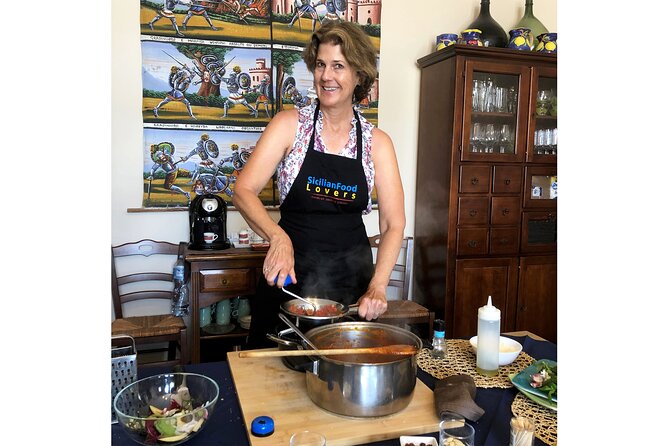
The address alone hints you’re in for something special: Villa Palamara is a former Benedictine monastery, dating to the 15th century, right by the sea near Cefalù. You’re not cooking in a bare studio. You’re working in a place with terraces, greenery, and coastal views that make the whole afternoon feel slower and more social.
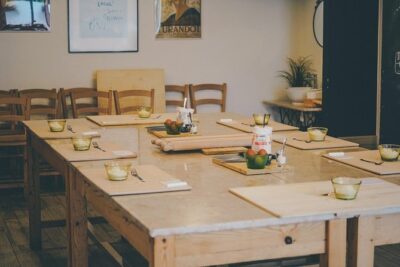
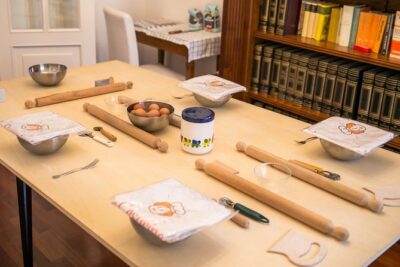
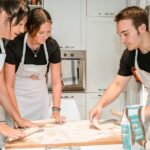
The practical side is big too. When a class is held in a proper villa with space for a prep setup, you can actually see what you’re doing. In the stories people tell, the prep table setup with fresh ingredients makes a strong first impression, and it helps you understand each step without guessing.
You also get a warm welcome. One of the nicest touches is the arrival ritual: refreshing lemon water, sparkling Prosecco, and small bites before you start cooking. It’s a subtle reset from travel mode into food mode.
You can also read our reviews of more tours and experiences in Sicily.
The 11:30 schedule: what a 5-hour pasta day actually feels like
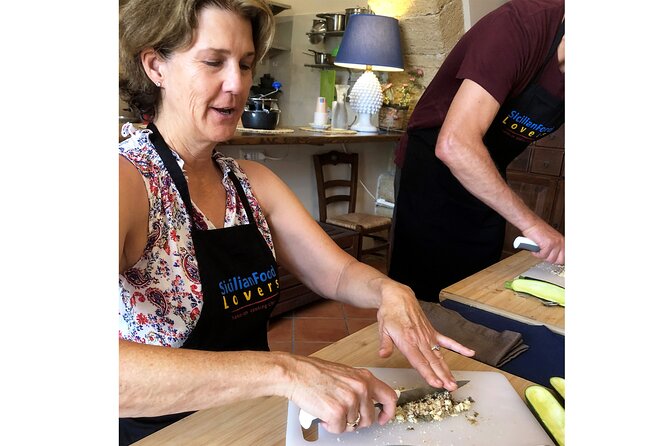
You meet at Villa Palamara 1868 at 11:30 am. The experience ends back at the meeting point, so you’re not worried about a later transfer.
From there, expect a flow that mixes instruction, hands-on cooking, and eating together:
1) Warm welcome + quick property moment
You’ll get settled, then you typically get a short look around the villa. It’s not a lecture tour. It sets the stage and makes it feel like you’re part of a day at a real Sicilian home.
2) Cooking begins with a guided, step-by-step plan
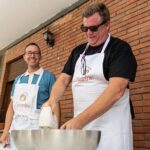
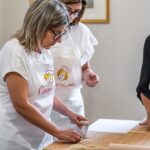
This class is designed for beginners and food lovers, and the pacing reflects that. You work alongside a chef while the sommelier and/or team keep the rhythm steady, including drink service.
3) You tackle components across a full menu
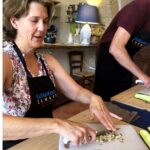
Even though it’s called a 4-course meal, the work is spread across multiple preparations. The class covers seven different cooking tasks that build toward the final plates. That’s a big part of why it feels like a true workshop rather than a show-and-tell.
4) You eat what you make, paired with wine and coffee/tea
The payoff is immediate. You don’t finish cooking and then wait around for a later dinner. You get to sit down and taste your own work while the flavors are still fresh.
If you’re the type who learns by doing, this format is a win. If you’re mainly looking for passive sightseeing, this might feel a bit too hands-on.
Pasta alla Norma from scratch: the Sicilian “main character”
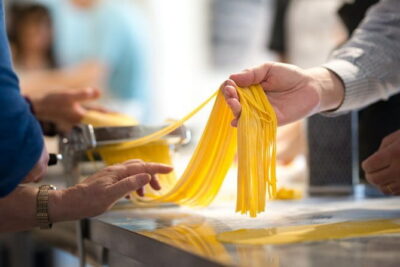
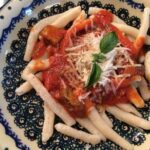
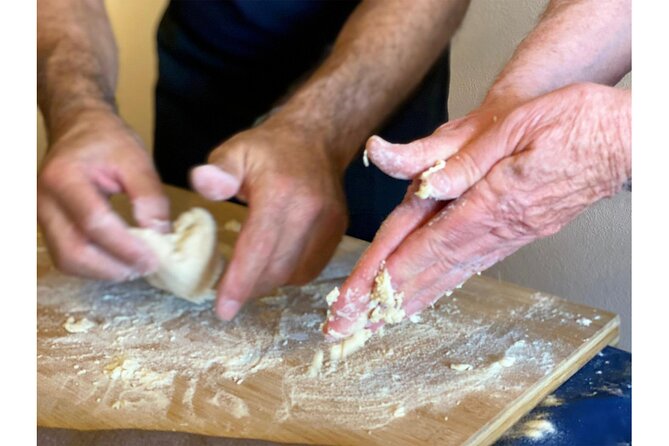
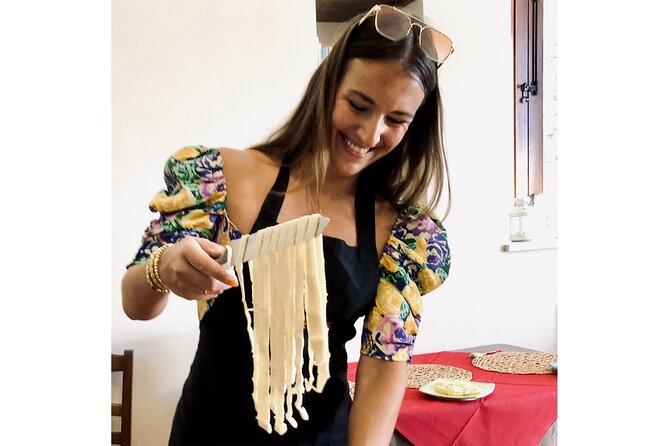
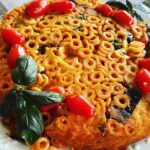
The star on the menu is Pasta alla Norma, and the class treats it like a skill, not a shortcut. You make fresh pasta and build the full plate with fresh tomato sauce and fried eggplant.
Here’s why this matters. In a lot of cooking classes, you get one part done well and the rest is assembly. This one keeps you busy across the key flavors and textures:
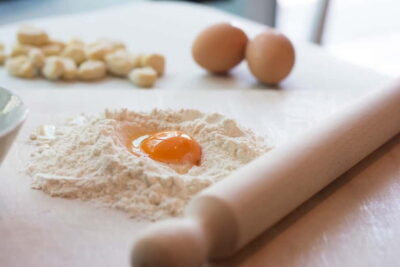
- The pasta isn’t store-bought, so you learn what fresh dough work feels like and why it changes the final bite.
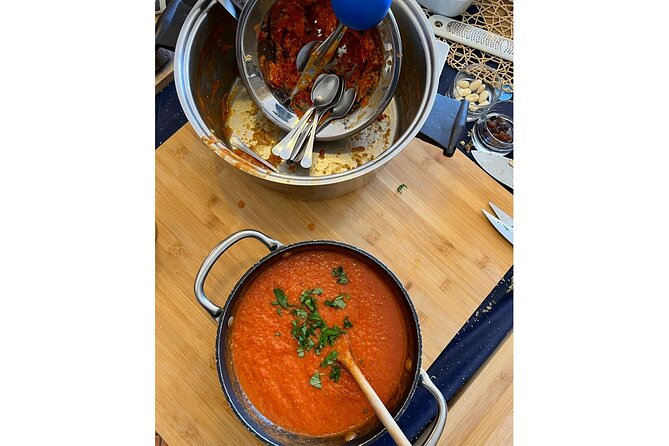
- The tomato sauce is fresh and built in the class flow.
- The eggplant gets fried for that classic contrast with the sauce and pasta.
Also, the teaching style is practical. The chef doesn’t just say do this. He explains the why behind the steps, which helps you recreate it at home. That’s what you’re really paying for: a method you can repeat, not just a memory of what tasted good.
If you love vegetarian-friendly Sicilian flavors, you’ll appreciate how the eggplant and tomato do the heavy lifting. And if you don’t usually make pasta, this is a confidence builder because you’re not facing a single overwhelming task. It’s broken into stages that add up.
Sicilian braciole and pork rolls: technique you can actually repeat
The meat course is Sicilian braciole, described as pork rolls, and it’s one of the most memorable parts of the class for people who want real cooking education.
You learn how to shape and manage the roll so it cooks correctly and stays together. That sounds basic until you’re standing at the table doing it. The chef’s patience is a big deal here. In the feedback, people highlight how clearly Antonio explains what to do and how to fix things as you go.
Why braciole is worth learning:
- It teaches a classic Sicilian approach to turning meat into something flavorful and portionable.
- It gives you a template for rolling other fillings in your own kitchen later.
- It balances the heavier pasta with a different texture and eating rhythm.
Even if you don’t cook much at home, the lesson sticks because you’re making something that feels like a real Sicilian main, not a simplified tourist plate.
Stuffed zucchini, orange and fennel salad, and Bianco Mangiare
A class can have one great dish and still fall flat. This one builds the whole meal around complementary tastes, and the menu choices are smart.
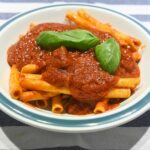
Starter: Stuffed zucchini
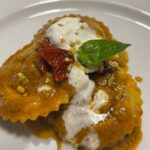
You’ll prep stuffed zucchini as your starter, giving you a quick win before the pasta and meat work takes center stage. It’s a good warm-up dish because it keeps you hands-on but doesn’t overwhelm you early.
Side dish: orange and fennel salad
The side course is an orange and fennel salad. That matters more than people think. Citrus cuts through richness, and fennel adds a fresh, slightly anise-like lift. It’s the kind of Sicilian pairing that makes a full meal feel lighter, even when you’re eating pasta and pork.
Dessert: Bianco Mangiare with lemon cream and fruit
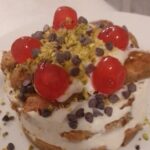
For dessert, you’ll make Bianco Mangiare, a typical Sicilian lemon cream served with fruit. The style is described as simple, light, and fresh. That’s a great ending because it doesn’t fight the savory flavors you’ve been cooking for hours.
You’re also told to expect a dessert that uses fresh ingredients. That freshness theme shows up across the menu, and it’s one reason the meal lands so well.
Wine, coffee, and what’s truly included
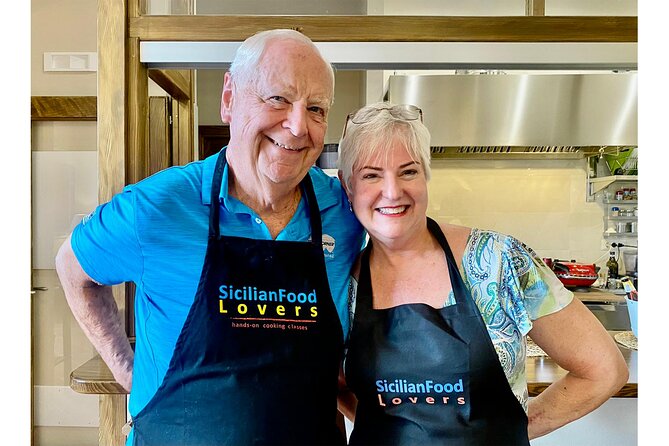
This is not a BYOB class. Alcoholic beverages are included, and you also get non-alcohol drink options.
Included in the price:
- Sicilian sparkling wine
- Sicilian wine (white or red)
- Water and fruit juices
- Coffee and/or tea
- Bottled water
- All necessary equipment
There are a couple of practical notes:
- Alcohol is for guests age 18 and over.
- If you don’t want wine, you still get plenty of other drinks to keep you comfortable during the cooking flow.
The wine and the food pairing is part of the experience logic. As you cook, you can taste and adjust your attention to what the chef is doing. It makes learning feel more connected than watching alone.
Dietary needs: how you keep the meal fair and still Sicilian
One of the best parts here is the stated flexibility: vegetarian, vegan, gluten-free, and lactose-free options are available with prior notice.
That means you don’t have to sit out the class portion if you avoid certain ingredients. It also suggests the chef’s teaching approach is adaptable. You might find that some components shift while the overall structure of the meal stays true to the Sicilian flavor profile.
If you have dietary requirements, plan to communicate them early when you book. That’s the only way you’ll get the right substitutions in time.
Small group size in a real kitchen: why max 12 is a big deal
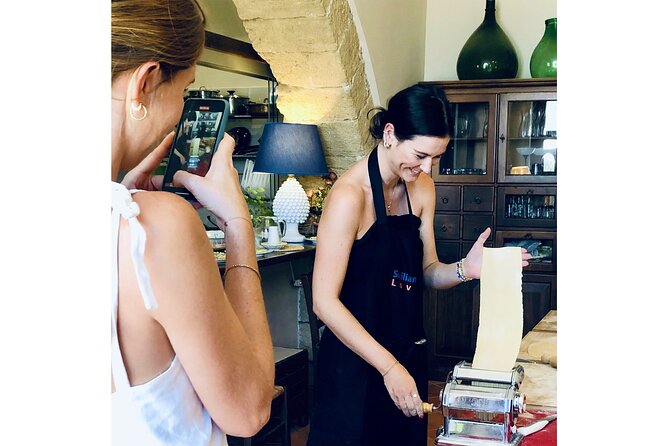
The class caps out at 12 travelers. In practice, that size is ideal for hands-on cooking because you can get help when you need it. If you’re a beginner, that safety net matters.
It also affects the vibe. The venue feels communal: you cook, you talk, you taste, and you eat what you made. People mention how the group size feels ideal, and that lines up with what you’d expect from a class where everyone is working at prep stations.
Another point: the experience is offered in English. If English is your comfort language, this reduces the friction that sometimes happens in food classes abroad.
Price and value: why $144.82 can be fair
At $144.82 per person, you’re paying for more than “a meal with entertainment.” You’re paying for:
- Chef-guided instruction through multiple preparations
- Fresh ingredients and equipment
- Wine, sparkling wine, and other drinks
- A full 4-course meal you eat after cooking
- A high-quality venue in a historic seaside villa
Classes like this often feel overpriced if the food is mostly assembly. Here, you’re actively building key parts of the menu, including fresh pasta and a major meat course, then sitting down to enjoy it. That’s why the value holds up.
So ask yourself one question: do you want to just eat in Cefalù, or do you want to take a Sicilian technique home with you? If it’s the second one, the price makes sense.
Who should book this class in Cefalù
This cooking class is a great fit if you:
- want a hands-on way to understand Sicilian flavors
- enjoy learning by doing, especially with pasta
- like food that’s classic and repeatable at home
- want a small-group experience in a historic seaside villa
It’s less ideal if you:
- hate long, structured activities (it’s about 5 hours)
- want mostly sightseeing with minimal cooking
- have very tight timing and can’t spare the late morning into early afternoon
Should you book this hands-on Sicilian pasta class?
I think it’s an easy yes if you like cooking as a travel souvenir. The setting at Villa Palamara makes the afternoon feel memorable, and the menu focuses on real Sicilian staples you can recreate: Pasta alla Norma and braciole, plus zucchini, orange-fennel salad, and Bianco Mangiare.
Book it if you can commit to the fixed schedule and you’re ready to cook. Pass if you want a casual snack stop or you’re hoping for a mostly observational tour.
FAQ
FAQ
How long is the cooking class?
It runs for about 5 hours.
What time does the class start?
The start time is 11:30 am.
Where do I meet for Sea Villa Cefalù?
You meet at Villa Palamara 1868, Contrada Plaia degli Uccelli, near Cefalù, Italy.
What dishes are part of the 4-course menu?
The menu includes stuffed zucchini, Pasta alla Norma, Sicilian braciole (pork rolls), orange and fennel salad, and Bianco Mangiare with Sicilian lemon cream and fruit.
Are drinks included?
Yes. The class includes Sicilian sparkling wine, Sicilian wine (white or red), water, fruit juices, and coffee and/or tea. Alcohol is for 18 and over.
Can the menu accommodate dietary needs?
Vegetarian, vegan, gluten-free, and lactose-free options are available if you provide prior notice.
How large is the group?
The class has a maximum of 12 travelers.
Is the class offered in English?
Yes, it is offered in English.
What is the cancellation policy?
The experience is non-refundable and cannot be changed for any reason.
Are service animals allowed?
Yes, service animals are allowed.