REVIEW · SICILY
Catania Home Cooking: Pistachio Ravioli, Sicilian Pasta & Wine
Book on Viator →Operated by Curioseety SRLS · Bookable on Viator
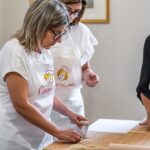
Catania tastes better when you make it. In a host apartment in Catania, you’ll shape fresh pasta and pistachio ravioli, then eat what you cook with local wine. It’s a real home kitchen, so before you go, ask about the setup if pets, smoking, or hygiene details matter to you.
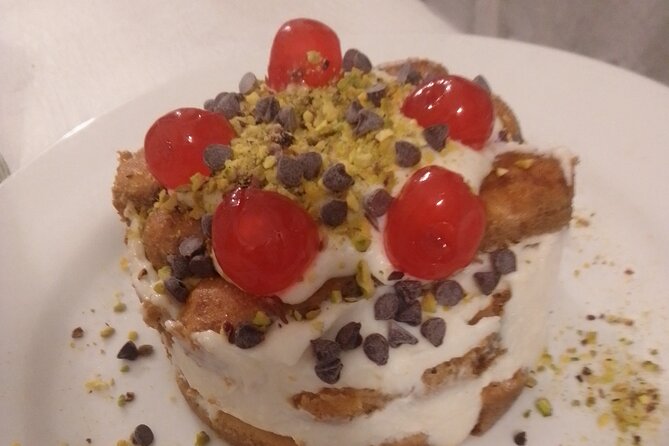
My favorite part is the dessert and drink pairing. You’ll learn how to build cannolamisù (a deconstructed cannoli twist on tiramisù) with creamy ricotta, then sit down to enjoy the meal with local wine.
In This Review
- Key Highlights You Should Know
- Why This Catania Cooking Class Feels More Like Dinner Than a Lesson
- Your 3-Hour Flow in Catania (What Happens, In Order)
- Bruschette That Sets the Tone: Pear, Sun-Dried Tomato, and the Classic
- The Pasta Workshop: Pistachio Ravioli Plus Sicilian Shapes
- Pistachio-filled ravioli
- Caserecce and gnocchetti
- What to expect from the teaching
- Sauces That Explain Sicilian Flavor: Norma, Trapanese Pesto, Aeolian Style
- Dessert Mission: Cannolamisù and Biancomangiare
- Wine at the Table: Turning Cooking Into an Evening
- Home Kitchen Reality Checks: Comfort, Pets, and Hygiene
- Price and Value: What $106.04 Buys in Catania
- Who This Cooking Class Suits Best (And Who Might Want to Skip)
- Final Verdict: Should You Book?
- FAQ
- What’s the duration of the Catania home cooking class?
- What will I make and eat during the class?
- Is the class offered in English?
- How many people are in the group?
- Can the host handle allergies or intolerances?
- Where do I meet, and does the tour end there?
Key Highlights You Should Know
- Hands-on pasta skills: roll, cut, and fill ravioli plus shape other Sicilian formats.
- Pistachio ravioli and classic sauces: you’ll practice flavors like Norma, Trapanese pesto, and Aeolian-style dressing.
- Dessert with Sicilian personality: cannolamisù and biancomangiare show up at the end of the meal.
- Bruschetta starter with creative toppings: think pear and sun-dried tomato alongside the classic version.
- Small-group feel: the experience caps at 6 people, so you’re not lost in a crowd.
- English offered: you’ll get instruction in English, with hosts known for friendly hospitality in past evenings.
Why This Catania Cooking Class Feels More Like Dinner Than a Lesson
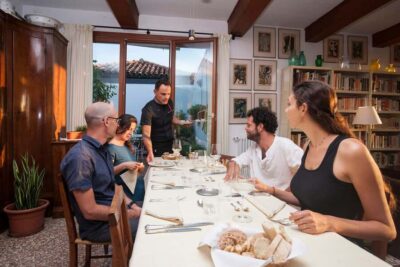
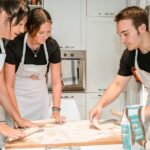
A cooking class in someone’s apartment changes the pace. In Catania, you’re not in a demo studio with perfect lighting. You’re in a working home, learning how Sicilians actually eat: starter first, then pasta by hand, then dessert, all paired with wine.
This experience is especially good if you want something you can repeat later. The goal isn’t just to taste Sicily for one night. It’s to leave with technique: shaping and filling pasta, understanding how sauces behave, and learning how that final ricotta-based dessert lands so well after wine and pasta.
One more thing I appreciate: the menu isn’t basic. Pistachio-filled ravioli, Sicilian sauces, and a cannoli-inspired dessert are a strong mix for food lovers who want more than tomato sauce and noodles.
You can also read our reviews of more tours and experiences in Sicily.
Your 3-Hour Flow in Catania (What Happens, In Order)
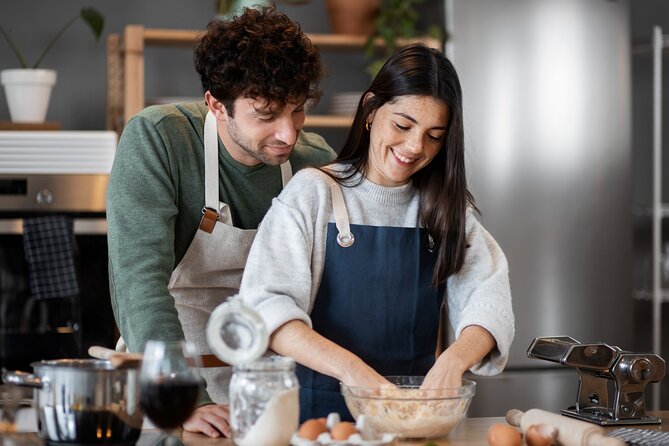
This runs for about 3 hours, starting and ending at the meeting point on Via E. A. Pantano, 112. The structure is simple, and it works well for a home setting:
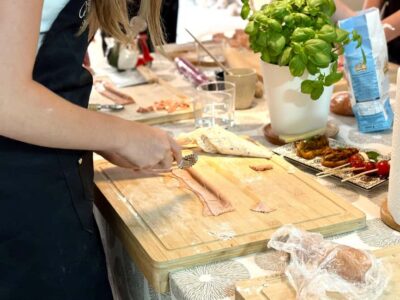
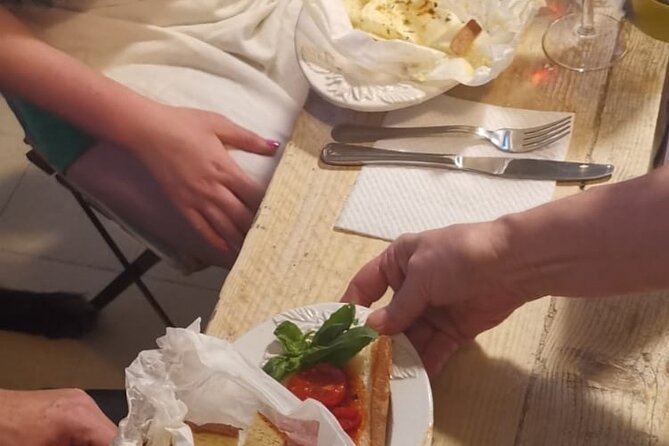
First, you start with gourmet bruschetta. You’ll get a traditional tomato-based option, plus creative combinations like pear and sun-dried tomato. It’s a nice warm-up because it sets the tone: Sicilian food isn’t shy about mixing sweet, savory, and salty.
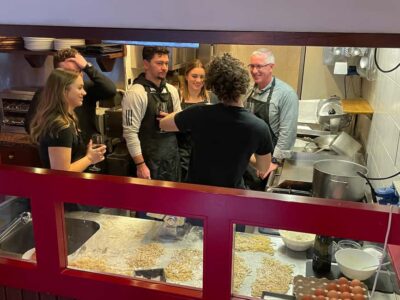
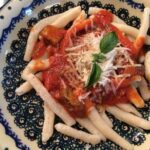
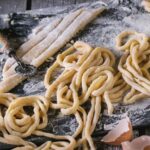
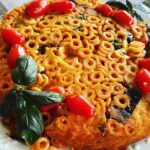
Then the main event: handmade pasta. You’ll learn to make and shape pasta and create dishes that include pistachio-filled ravioli, plus Sicilian shapes such as caserecce and gnocchetti. As you cook, you’ll also work with classic Sicilian dressings and sauces.
Finally, you finish with Sicilian dessert, with cannolamisù highlighted as a crowd favorite. Depending on your class, you might also see biancomangiare or a deconstructed cannoli-style approach. After dessert, you sit to enjoy everything you made, with fine local wine through the meal.
Bruschette That Sets the Tone: Pear, Sun-Dried Tomato, and the Classic
The best starters teach you something. These bruschette do. The classic tomato-based version gives you the familiar anchor. Then the pear and sun-dried tomato combination shows you how Sicilians balance flavors without turning it into a gimmick.
Pay attention to how the toppings sit on the bread. You’re not just piling stuff on top. You’re tasting contrasts: fruit sweetness against deep, salty tomato notes. That’s the same logic you’ll see later in the sauces and in how dessert sweetness works against ricotta richness.
Also, since this is served before the pasta work ramps up, it gives you time to settle in and talk with the host. If you want to go in slightly hungry and ready to learn, this is a smart start.
The Pasta Workshop: Pistachio Ravioli Plus Sicilian Shapes
This is the heart of the evening, and it’s why the class has staying power. You’ll be hands-on with fresh pasta, and you’ll work toward a menu built around pasta shapes that feel distinctly Sicilian.
Pistachio-filled ravioli
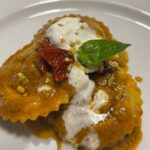
Pistachio ravioli is the star here. Expect to learn how to handle dough, how to portion the filling, and how to seal ravioli so they cook without splitting. It’s also a great skill for taking home, because pistachio filling (or a similar nut-based filling) can be adapted later.

Caserecce and gnocchetti
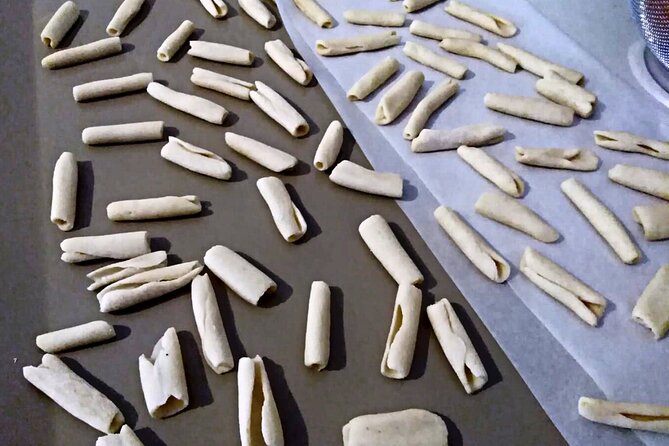
You’ll also shape other pasta forms, including caserecce and gnocchetti. Even if you’ve made pasta before, different shapes teach different habits. Caserecce is built for clinging sauce, while gnocchetti brings a slightly different texture and bite.
What to expect from the teaching
In past evenings, the hosts and chef-teachers have been friendly and patient, including names like Angela, Anna, or Daniela, with Francesco sometimes in the mix. That matters because pasta has a learning curve, and you’ll do better if you can ask questions and get small corrections.
Sauces That Explain Sicilian Flavor: Norma, Trapanese Pesto, Aeolian Style
What makes this class more than a cooking demo is that you don’t only learn pasta. You learn sauce logic.
You’ll pair your pasta with traditional dressings such as:
- Norma dressing (a classic Sicilian flavor profile)
- Trapanese pesto
- Aeolian-style dressing
Even if you don’t remember the exact ingredients later, the technique is the takeaway. You learn how each sauce behaves with pasta: thickness, cling, and how it coats without drowning the pasta. In Italian home cooking, sauce consistency is the difference between good and memorable.
There’s also a practical side here. Once you understand how a sauce is meant to grip or spread, you can remix it at home with what you find in local markets. That’s one of the real values of a class like this: you’re not buying an ingredient list. You’re learning a system.
Dessert Mission: Cannolamisù and Biancomangiare
Dessert is where a lot of food classes fall flat. Here it’s designed to finish strong.
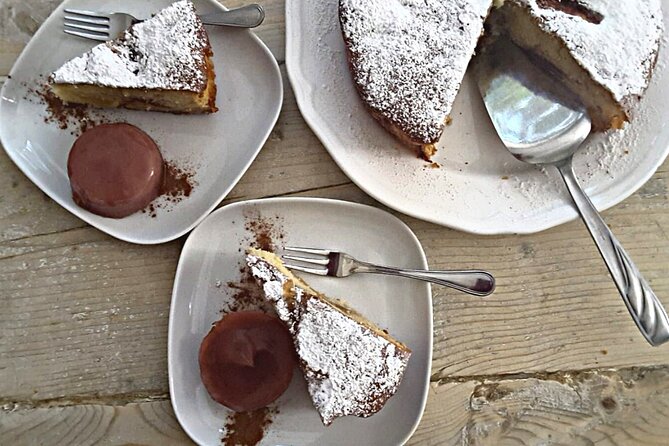
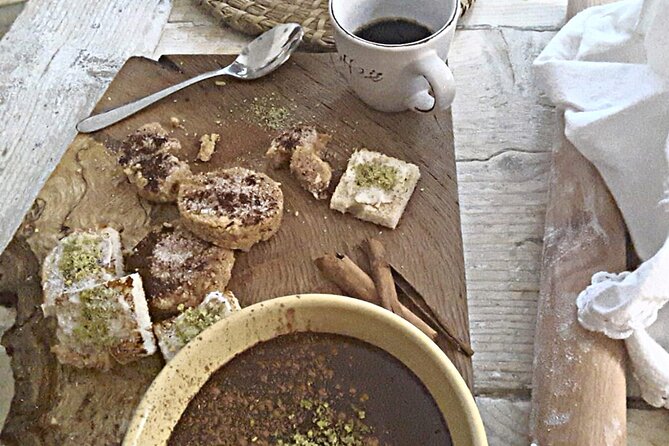
You’ll learn about cannolamisù, described as a creative twist on tiramisù built with creamy ricotta. Think of it as cannoli flavor energy, but with an easier-to-slice, spoon-friendly structure. It’s sweet, but not just candy-sweet. Ricotta helps it feel soft and rounded.
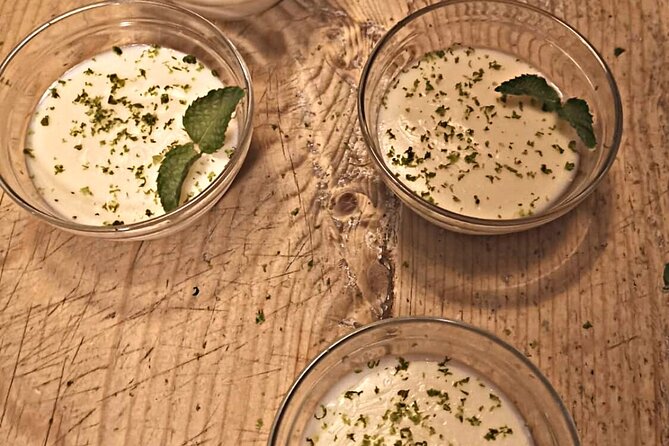
Biancomangiare and deconstructed cannoli also show up as part of the dessert offering. In some home settings like this, desserts can be partly assembled tableside rather than built from absolute scratch. If you care deeply about every step being hands-on, ask your host what you’ll do during dessert time.
Either way, this is the sort of finale that makes the evening feel like a real Sicilian meal, not a class that ends abruptly right after the pasta.
Wine at the Table: Turning Cooking Into an Evening
This experience includes fine local wine with your meal. That changes the feel. You get to taste while the food is fresh and while the conversation is still flowing.
In past classes, the meal has sometimes expanded with extra Sicilian courses like risotto or caponata, and some groups have talked over homemade liqueurs like limoncello. Those additions aren’t guaranteed for every session, but they point to the same idea: the host isn’t just teaching. She’s feeding.
When you’re pairing pasta and dessert with wine, you learn something fast: what sweetness tastes like after wine, and how rich ricotta dessert feels when the savory courses have already primed your palate.
Home Kitchen Reality Checks: Comfort, Pets, and Hygiene
I’m going to be direct here, because this is important with home-hosted experiences.
This class happens in an apartment kitchen. In one case, a participant raised serious concerns about pets in the kitchen, smoking, and hygiene details like sanitizer and hair coverage. The provider later replied with a different account, saying those claims didn’t match what happened during the evening.
So what should you do with that information?
- If you’re sensitive to comfort issues (pets around food, smoke smell, hair-hygiene practices), message the provider ahead of time and ask what the kitchen setup is like.
- If you have allergy or intolerance needs, inform them in advance so you’re not guessing later.
This isn’t about scaring you away. It’s about helping you go in with eyes open, because a home kitchen can never be identical to a professional restaurant setup.
Price and Value: What $106.04 Buys in Catania
At $106.04 per person for about 3 hours, you’re paying for three things at once:
1) instruction (hands-on pasta making),
2) a full meal flow (starter, pasta, dessert),
3) wine included.
In other words, you’re not just paying for ingredients. You’re paying for time, teaching, and the host’s kitchen. And because the group cap is max 6, the cost can make sense compared with larger classes where you get less personal attention.
If you’re the type who hates spending a vacation doing something passive, this class is built to keep your hands busy. The practical outcome is that you can take skills home: pasta shaping, filling, and sauce pairing.
Who This Cooking Class Suits Best (And Who Might Want to Skip)
This is a great fit for:
- food lovers who want a Sicilian home-cooking experience in Catania
- couples and small groups who prefer a calmer setting over a big, noisy workshop
- people who want specific dishes to repeat later, like pistachio ravioli and cannolamisù
It might be a tougher fit if:
- you want a very controlled, restaurant-style environment where every hygiene element is identical to a commercial kitchen
- you have strong sensitivities and don’t want to deal with the realities of an apartment setup
Also consider language comfort. English instruction is offered, which helps a lot. In past evenings, even when translation got tricky, people worked through it and still had a great time. But if you’d like fewer communication headaches, you can still ask your questions clearly before you arrive.
Final Verdict: Should You Book?
I’d book this if you want something hands-on and distinctly Sicilian: fresh pasta, pistachio ravioli, classic sauces, and a ricotta-based dessert that feels like a genuine Catania meal. The small group size and wine pairing push it beyond a quick tasting.
I’d think twice only if you have strong concerns about home-kitchen variables like pets or smoke. If that’s you, message ahead and ask the kitchen setup questions directly. With those boundaries clear, this becomes a memorable, repeatable evening.
FAQ
What’s the duration of the Catania home cooking class?
The experience lasts about 3 hours.
What will I make and eat during the class?
You’ll learn to make fresh pasta (including pistachio-filled ravioli, caserecce, and gnocchetti) and pair it with Sicilian sauces like Norma, Trapanese pesto, and Aeolian style. You’ll also start with bruschette and finish with Sicilian dessert such as cannolamisù or biancomangiare.
Is the class offered in English?
Yes, the experience is offered in English.
How many people are in the group?
The tour/activity has a maximum of 6 travelers.
Can the host handle allergies or intolerances?
Yes, but you should inform the provider in advance of any allergies or intolerances so the experience can be safe and enjoyable.
Where do I meet, and does the tour end there?
You start at Via E. A. Pantano, 112, 95129 Catania CT, Italy, and the experience ends back at the meeting point.