REVIEW · LECCE
Lecce: Pasta Making Class in 1400s-Era Courtyard with Wine
Book on GetYourGuide →Operated by LecceGo · Bookable on GetYourGuide
Spend an evening making pasta the old way. In Lecce, you’ll learn orecchiette and sagne in a 1400s courtyard setting right in the historic center—part cooking class, part neighborhood ritual. The location alone makes the experience feel grounded in Apulia, not staged for tourists.
I especially like the hands-on focus: you mix the dough, learn the tools of the trade, and shape pasta with guidance from locals like Nonna Teresa and instructors such as Luciana or Therese. I also like that the class doesn’t end at the workshop table—you eat what you make afterward with wine.
One thing to consider: this is a shared group experience, and the class can feel lively and busy when the group is full (some sessions run around twenty people). If you prefer quiet, one-on-one instruction, this may feel a bit crowded.
In This Review
- Key highlights worth your evening
- Lecce’s 1400s courtyard: where the evening starts
- What happens in the kitchen: dough, tools, and technique
- Orecchiette in real life: shaping the classic “little ears”
- Sagne in Apulia: a second pasta with its own rhythm
- Wine and your finished pasta: turning practice into dinner
- Price and value: is $68 a fair deal?
- Who should book this pasta class in Lecce?
- Should you book LecceGo’s Lecce pasta-making class?
- FAQ
- Where is the meeting point?
- What pasta will I learn to make?
- How long is the experience, and what’s included?
- What languages are offered?
- Is it wheelchair accessible, and does it run in bad weather?
- Can I cancel for a full refund?
Key highlights worth your evening
- 1400s-era courtyard setting in central Lecce, inside the museum area
- Hands-on pasta shaping for orecchiette and Apulian sagne
- Clear instruction with multilingual support from Italian, English, and French instructors
- Wine included after you finish cooking, while you share the meal
- Local teaching styles: patient coaching plus quality checks, often with a stern-but-funny vibe
- A social evening where people from different countries end up working side-by-side
Lecce’s 1400s courtyard: where the evening starts
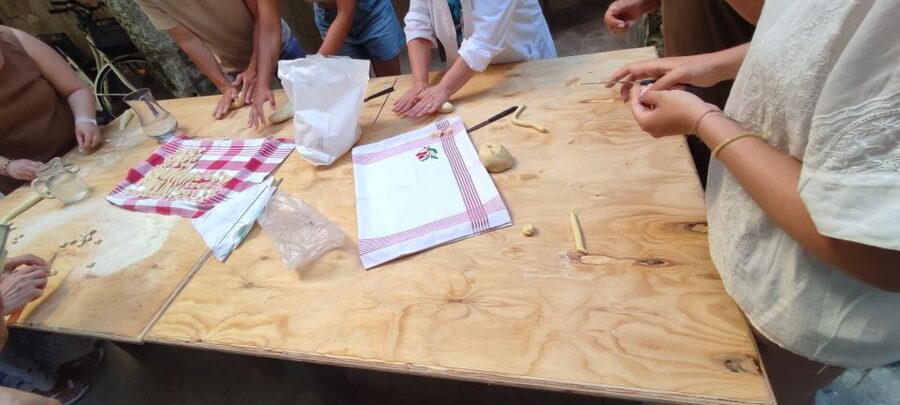
The meeting point is via Ascanio Grandi n 58, at the Faggiano Archaeological Museum. From there, you’re set up for something that feels more like entering a historic home than attending a textbook cooking session.
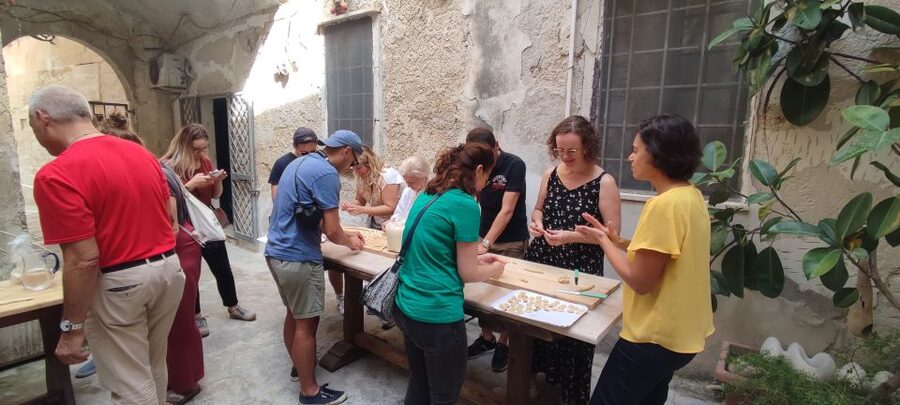
The big draw is the courtyard. You’ll be working in a space that matches the food’s origin story: Apulia’s cooking is simple, hands-on, and built for real daily life. Reviews frequently highlight the beauty of the venue and the way it helps the whole evening feel like an authentic Lecce moment rather than a quick detour.
You’ll also get that warm, slightly serious local energy. In a number of class descriptions, instructors are described as funny but firm—focused on technique and making sure everyone gets the dough and shaping steps right.
What this means for you: you’re not just watching. You’re doing, in a setting where it makes sense to slow down and learn by repetition.
What happens in the kitchen: dough, tools, and technique
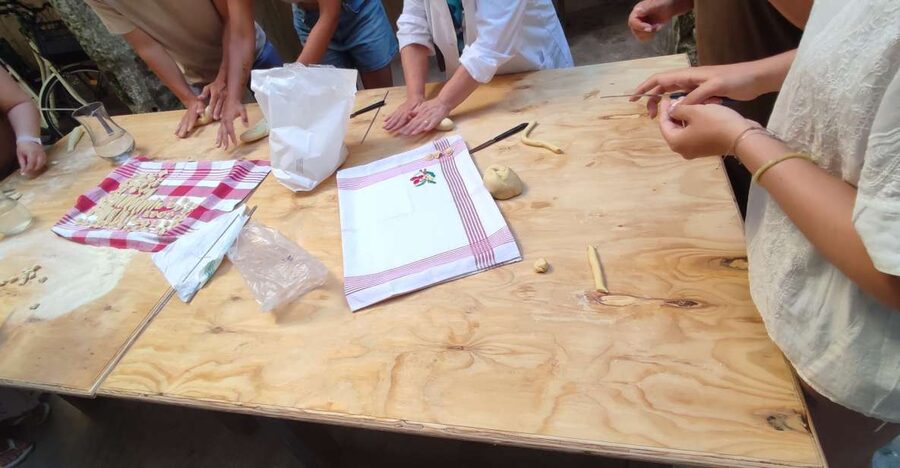
You’ll spend about 2.5 hours total, and the structure is built around learning the core steps rather than rushing through them. The class includes equipment and a professional local cook, with language support in Italian, English, and French.
Early on, you’ll get instruction on how to mix water and flour and how the dough should feel before it becomes pasta. That sounds basic, but it’s the kind of skill that changes everything. Too dry and the dough cracks. Too wet and it’s hard to shape cleanly.
Then comes the tools. Apulian pasta isn’t only about the recipe—it’s about technique: how you use your hands and whatever shaping tools the instructors provide. This is where the local teachers’ guidance matters. In the feedback you provided, instructors keep an eye on quality, and they’ll often re-explain steps when people need a second try.
Practical takeaway: if you’ve never made fresh pasta before, you’re still in the right place. You don’t need special culinary talent—just patience and a willingness to mess up a little on your first pass.
Orecchiette in real life: shaping the classic “little ears”
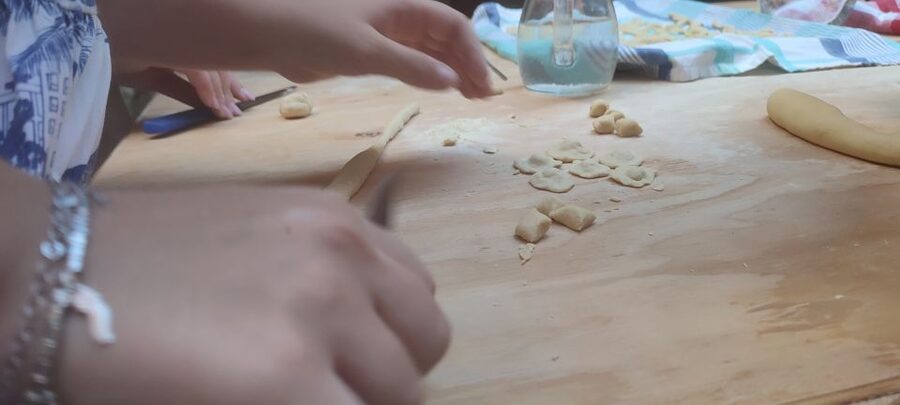
Orecchiette is the star here, and the class is clearly designed around learning it properly. You’ll form the pasta in a way that’s tied to the region’s tradition, not a modern adaptation.
What makes orecchiette tricky is also what makes it satisfying: the shape has to be consistent enough to cook well, but not so rigid that it loses the handmade character. This is why instruction is so hands-on. A few reviews describe instructors as keeping people moving and correcting technique without being mean about it. The tone sounds like: work carefully, don’t rush the dough, and follow the steps.
You’ll also get a sense of why orecchiette is loved worldwide. It’s not just a cute shape. The “ear” form helps pasta hold sauce, which is the whole point. In a meal context, it means the pasta doesn’t feel like a chore—it feels like it belongs with flavor.
If you’re a first-timer: plan to focus less on making perfect pieces and more on mastering the motion and timing. Your first batch will probably look homemade. That’s okay. That’s the point.
Sagne in Apulia: a second pasta with its own rhythm
After orecchiette, you’ll learn about sagne, a type of pasta connected specifically with Puglia. Unlike orecchiette—where the shape is the show—this second pasta teaches you to adjust how you work the dough and how you approach texture and cutting/forming.
The instructors’ job here is important: sagne requires attention to consistency. If the dough is slightly off, the pasta won’t behave the same way. That’s why you’ll hear repeated guidance about dough feel and tool use.
From the way the class is described, the learning isn’t just theoretical. It’s interactive. You’re there to make, correct, and finish. And when you finally set the pasta aside to cook (or while it’s cooking), you get that rewarding feeling of having done real work with your hands.
What you’ll enjoy most: the moment when you realize you understand the method, not just one step. Once you learn how the dough responds, everything gets easier.
Wine and your finished pasta: turning practice into dinner
The best part of cooking classes isn’t only the cooking. It’s eating. Here, you’ll eat your pasta after the course with a glass of wine.
This matters more than it sounds. When you sit down afterward, you can taste what you made and connect it to what you learned. Fresh orecchiette and sagne have a different bite than dried pasta, and you’ll notice it immediately. The wine then rounds out the evening into something that feels like an actual meal, not a class snack.
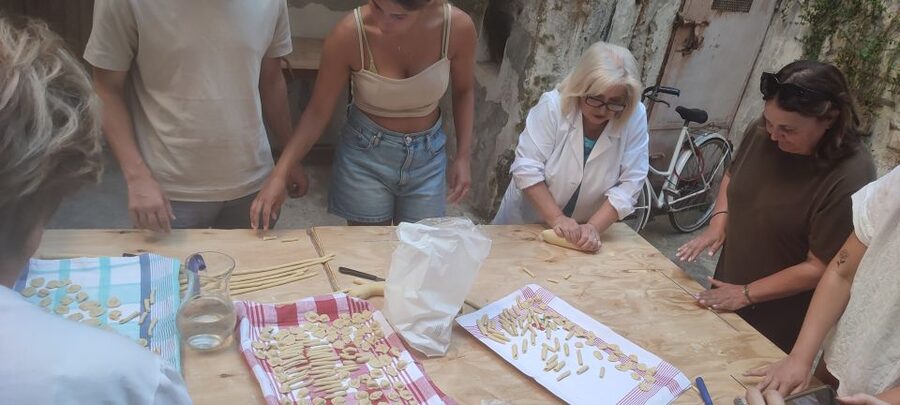
A recurring theme in the reviews is the social side: people laugh, work near each other, and swap travel stories while sharing the final food. Many groups include participants from multiple countries, which adds energy to the courtyard setting.
Some evenings may also include small extras while pasta is cooking, like local music—one review described that kind of surprise. You should treat that as a nice bonus rather than a guarantee.
Tip for your evening: pace your appetite. Even if you’re hungry, your best learning happens when you stay focused during shaping. Save the full celebration for after the meal.
Price and value: is $68 a fair deal?
At $68 per person for 2.5 hours, this class is priced like a hands-on food experience that includes more than instruction. You get:
- a professional cook teaching you
- equipment included
- the historic museum-area courtyard setting
- a meal built from your pasta
- a glass of wine
- multilingual instruction in Italian, English, and French
In plain terms, you’re paying for time with locals plus ingredients plus the venue plus the work of guiding beginners. If you’ve been to other cooking classes that are mostly demo-based, this one has the advantage of real participation. That’s often where the value shows up: you leave with a skill you can repeat at home, not just photos.
Transport isn’t included, so you’ll want to plan how you’ll get to via Ascanio Grandi n 58. But once you’re there, you’re covered for the core experience.
For me, the value is strongest if you want an authentic Lecce night. It’s not the cheapest activity in town, but it’s the kind that makes your dinner feel personal.
Who should book this pasta class in Lecce?
This is a good fit if you want:
- a hands-on learning experience in central Lecce
- a real taste of Apulian pasta culture through orecchiette and sagne
- a relaxed evening meal with wine included
- a social atmosphere where group members end up talking
It may not be ideal if you:
- hate group classes or want one-on-one attention
- want a silent, slow-paced workshop (the energy can be lively when groups are larger)
- need a super flexible schedule beyond a specific start time
Good news: the class is wheelchair accessible, and it runs rain or shine. Also, the course can be canceled if the minimum group size isn’t reached, with notice and a refund if that happens.
Should you book LecceGo’s Lecce pasta-making class?
If you’re in Lecce and you’ve been craving something more memorable than another walking tour, I’d book this. The combination of a 1400s courtyard setting, genuinely regional pasta skills, and finishing with your own orecchiette and sagne plus wine makes it a strong value choice for an evening.
My decision rule is simple: if you like cooking by doing—even with flour on your hands—this class fits. If you’re expecting a quick, hands-off experience, you’ll want to look elsewhere.
If you do book, bring an open mind and plan to learn one technique at a time. By the end, you won’t just know what orecchiette and sagne are—you’ll know how they’re made.
FAQ
Where is the meeting point?
You meet at via Ascanio Grandi n 58, at the Faggiano Archaeological Museum in the center of Lecce.
What pasta will I learn to make?
The class focuses on making orecchiette and sagne, two traditional types of pasta connected to Puglia.
How long is the experience, and what’s included?
The class lasts 2.5 hours. It includes a professional cook, cooking equipment, the historic museum-area location, and you eat the pasta you make with a glass of wine.
What languages are offered?
Instructors/guides speak Italian, English, and French.
Is it wheelchair accessible, and does it run in bad weather?
Yes, it is wheelchair accessible. The course takes place rain or shine.
Can I cancel for a full refund?
Yes. You can cancel up to 24 hours in advance for a full refund.